Contents · 12 sections
Not everyone with pectus excavatum experiences pain, but for those with severe cases, it can be a constant struggle. The pain often intensifies as the deformity worsens.
Personally, the pain I felt in my chest and back kept me up at night and pushed me to take action. It wasn’t just about looking better, it was about finding relief from the discomfort.
In this blog post, you’ll learn about the causes of pectus excavatum pain, how it affects your daily life, and effective ways to manage and reduce the pain through exercises, posture improvement, and other methods.
If you’re struggling with pain from pectus excavatum, this guide will help you find the relief you need.
6 Symptoms
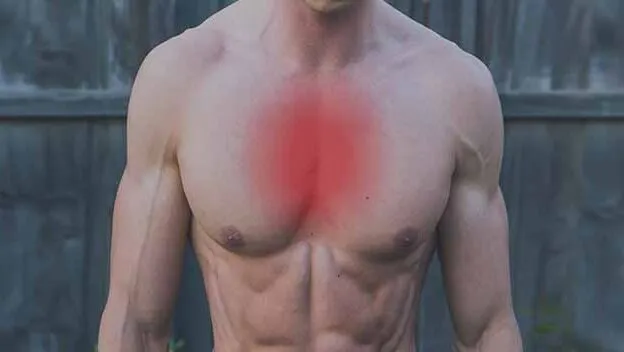
You will generally feel the pain caused by pectus excavatum in six different areas.
- Chest
- Back
- Ribs
- Stomach
- Shoulders
- Spine
Most physicians aren’t aware that the funnel chest deformity is a reason for pain in areas other than the chest and back. I suffered from the spine, back, and stomach aches.
I thought it was caused by my pectus excavatum because there wasn’t any other logical reason for the source of the pain, so I went to the specialist.
He wasn’t sure where the pain came from. He told me I had food poisoning despite my rigorous and clean diet. The stomach pain was weird. It was something that I hadn’t experienced before.
However, at the time, my posture was in the worst condition of my life because of playing video games for more than ten hours a day. Playing World of Warcraft, DOTA, and Conquer Online took a toll on my health.
My pectus excavatum got worse because of my bad posture and scoliosis. After going home, I read about the most common pectus excavatum pain symptoms.
I noticed that I experienced every single pain associated with the deformity. That is when everything clicked and made sense to me.
Pectus excavatum caused pain throughout my entire body. Please learn from the mistakes I made in my teenage years. Use my story so you don’t allow the deformity to damage your body and feelings.
What Causes Pain?
If there is severe pectus excavatum deformity, the sternum can press against the lungs and heart. This is what causes aches and discomfort throughout the whole body.
The deformity causes discomfort in the chest area, leading to sharp pain if left untreated.
The pain will make you anxious and depressed. You will have trouble concentrating on things at school or work.
The worst part about the pectus excavatum agony is that it occurs when you least expect it. Sometimes a sternum crack can cause pain.
You will feel weird and horrible thinking about how the breastbone pushes against your heart and the lungs inside your chest.
Your mind-to-body connection will make the agony much worse. If you’re feeling some pectus excavatum pain symptoms, please start improving your deformity.
Reasons for Paini
There isn’t any scientific evidence on what causes pectus excavatum chest pain. It is known that the pain is much worse in males than in females.
However, surgeons believe sternum compression on the lungs and heart is the exact cause. Another theory is how the pectoralis muscles cross the chest and attach to the rib cage and sternum.
How Pain Feels
When the pectus excavatum chest pain occurs, it doesn’t last a very long time. It happens unexpectedly, plenty of times throughout the day. It can be very irritating, especially while trying to fall asleep.
If the pectus excavatum dent is deep, the breastbone will press against the heart and lungs more, causing a sharper ache.
This is frequent in sufferers with Haller Index higher than 3.5. Suppose the Haller Index of your pectus excavatum is lower than 3.5. In that case, the chances of you experiencing chest pain are smaller.
How Bracing Helped me
For some strange reason, I didn’t feel any chest ache whenever I wore a pectus excavatum brace. This isn’t tested scientifically, but I think the reasoning is the external pressure on the abnormal chest bone.
It supports the anterior chest wall area, keeping it snug and warm.
It is made of elastic and comfortable straps that mold perfectly around the body. You’ll get used to wearing that brace after just a week.
You’ll feel confident wearing the brace all day because the pectus excavatum chest pain won’t occur throughout the day.
Pain in Back
Just like pain in the chest, the origins of back pain caused by pectus excavatum remain unknown. The back agony caused by pectus excavatum is musculoskeletal. It is closely related to scoliosis and bad posture.
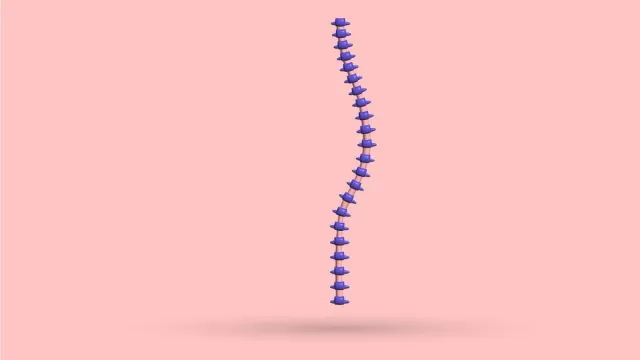
Scoliosis is a spinal condition in which the spine bends to the side. It pulls the rib cage out of the natural position and puts pressure on the muscles and bones in the back.
The pain you receive from scoliosis is mainly caused by the pressure on the spinal discs. This condition appears in most patients who suffer from hereditary pectus excavatum.
Usually, the pectus excavatum backache results in pain in the lower and upper back. It causes overall stiffness and postural weakness.
How to Deal With Upper Back Pain
The pectus excavatum upper back pain is usually caused by bad posture, muscle overtraining, or injury. Agony in this back area is more common than in the lower part.
The upper back ranges from the neck’s base to the ribcage’s lowest part. It is made of 12 bones, also known as the thoracic spine.
Slouching over in a chair in your office weakens the back muscles required for an upright posture. With time, this will worsen your pectus excavatum condition and posture, causing more pain in the upper back.
An easy way to stop pectus excavatum upper backache is to sit correctly. Also, take frequent breaks from sitting and try to do the overhead arm reach stretch.
Lower Back Pain
Lower back pain is more likely in sufferers aged 30 and above. The agony is related to the changes that happen to the body with aging. As you get older, the fluid between the spinal column is reduced.
Because of this, the spinal discs can experience aggravation far more easily. Also, losing some muscle tone in the lower back area because of aging makes this location prone to injury.
Strengthening the entire back musculature is very important in minimizing pectus excavatum pain. As you already know, inverted chest sufferers have limited workout capacities.
They can’t work out with the same intensity or frequency as ordinary people.
Exercises That Helped Me
However, if you want the pain to stay away from your back, you must do pull-ups and deadlifts. These two exercises are fantastic when it comes to improving pectus posture.
Because of this, there is an excessive strain on the muscles, tendons, ligaments, and spinal discs in the lower back area.
Surgery Pain Management
The pain caused by a Nuss or Ravitch procedure can be very severe. The anesthesiologist places a tiny catheter (epidural) in the patient’s back. It is meant to control the pain during and after the procedure.
In addition to opiates, doctors can give Toradol to some patients who suffer from severe pain.
However, this can be very harmful in some cases. Doctors must be cautious with agony management during and after post-operation.
There is the situation of 15-year-old Lewis Blackman, who died because of a post-surgical pain medication known as Toradol. It created a punctured ulcer in his stomach, which made him bleed to death.
Chest Pain After Surgery
You can feel the pain after pectus excavatum surgery while walking, taking deep abdominal breaths, and when coughing.
You’ll feel a sharp chest pain that needs to disappear after a week. Doctors need to be very careful with postoperative pain management.
They need to give you balanced doses of the medications. I think it is much better not to often complain about pectus excavatum pain after surgery.
As soon as you complain about pain, doctors will probably give you a dose of medication.
Too much medicine can harm your health. Lewis Blackman’s situation shouldn’t happen ever again.
Patients who underwent a long Nuss or Ravitch procedure will probably have a drainage tube in their chests as soon as they wake up.
It needs to drain excess fluid or air for a couple of days. Doctors will detach the tube throughout the hospital stay.
Pectus and Stomach Pain
Two factors cause your pectus excavatum stomach pain. You’ll probably experience pectus excavatum front pain while bending forward or backward. This includes sports, reading, writing on a desk, and picking an object.
The pectus excavatum deformity changes the effect of front bending. The breastbone will move backward instead of forward and cause excessive pressure on the protruding ribs.
The backward-moving pattern of the sternum, combined with the frontal flare of the abdomen, creates a crease line in the upper abdominals.
It will serve as a hinge when the sufferer bends forward, putting additional pressure on the lower ribcage.
This is when the sufferer experiences pectus excavatum abdominal pain. Also, ache management medications are proven to cause stomach pain.
This usually happens when the doctors give the patient a higher dosage than required.
They need to be very careful giving you the required doses. If Toradol is given in excessive amounts, it can rupture the ulcer in your stomach, causing excessive bleeding and even death.
Chest and Shoulder Pain
Pectus excavatum is also closely related to shoulder pain. Most sufferers experience a two-sided shoulder ache (usually more severe in the right shoulder than the left one).
In extreme cases, sufferers may experience a troubled sleep cycle because of sharp shoulder agony.
If you’re suffering from pectus excavatum shoulder pain, you need to increase the upper body’s strength and mobility. That will minimize the ache and prevent the shoulders from getting tired quickly.
Every patient suffering from sunken chest and shoulder pain is given a set of physical therapy exercises.
That includes:
- Breathing exercises,
- Aerobic training,
- Musculoskeletal stretches,
- Strengthening exercises.
It would be best if you did the breathing and aerobic exercises 3-5 times a week. Aim for 10 minutes of breathing exercises and 10 minutes of aerobic exercises.
Your goal should be 20 minutes for each workout session. The shoulder ache will disappear with yoga, and your overall body appearance will improve.
Aim to do at least 30 minutes of full-body power yoga at least three times a week. In addition to yoga, you should also do the Superman Exercise.
It’ll strengthen your posterior chain muscles, improve your posture, and decrease back and shoulder pain.
Pectus and Rib Pain
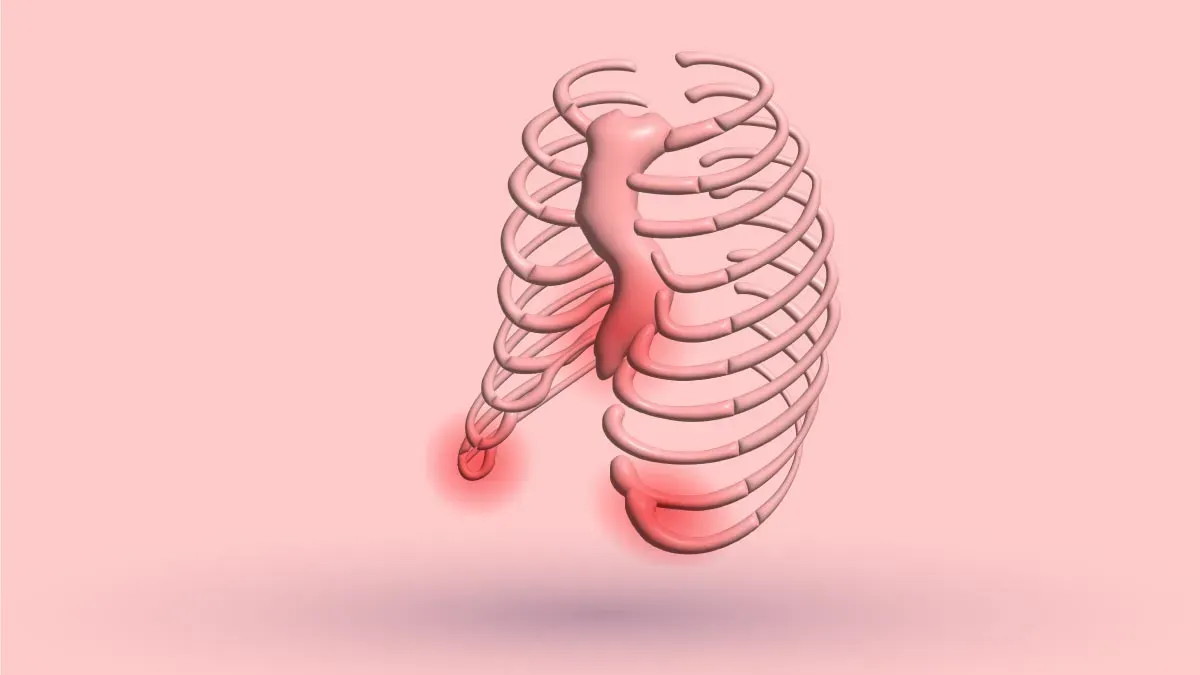
Pectus excavatum is also linked with rib pain. Most people who suffer from indented chest deformity have protruding ribs.
Even though it is a prevalent deformity, it isn’t healthy and needs treatment. It is a clear sign that your core musculature is weak. If you haven’t experienced pectus excavatum rib cage ache yet, you’re a part of the few.
However, if you don’t correct it as soon as possible, you’re on your path to agony and dysfunction. When the oblique muscles in your core are strong, they keep the ribcage in a normal position.
The pectus excavatum deformity weakens these muscles. That causes the bottom of the ribs to flare up and out. This extension of the ribcage causes a lot of postural, breathing, and stabilization problems.
Also, it causes rib pain. When you have flared ribs, breathing with the diaphragm muscles becomes more difficult. The body is fighting to find a solution to get more air into the lungs.
That is when we extend our lower backs to open our abdominals and use our neck musculature. This combination causes poor posture and pain in the ribcage area.
To repair this, you need to strengthen the core as a whole and correct bad posture. Focus mainly on the internal obliques and transverse abdominal muscles.
Kid Experiencing Pectus Pain
Most young patients under 12 years don’t experience pectus excavatum pain and shortness of breath. The reasoning is that children’s chest cartilages are still soft, flexible, and growing.
It is critically important for parents to check the posture of their kids frequently.
Usually, kids who suffer from pectus excavatum and lousy posture experience chest and back pain first. Their ache is related to their caved-in chest conditions, but they aren’t aware of that.
It is your role as a parent to let the kid know that poor posture causes the growth of pain.
Phantom Pain After Pectus Surgery
This odd perception of the pectus excavatum appearing the same, even though the surgery was successfully done is common in many patients after the surgery. They believe they can feel the chest dent the same way they did before surgery.
They know that the deformity is corrected and can see the difference in the mirror, but they still feel this weird feeling.
The phantom phenomenon is typically happening after an arm or leg is amputated. Still, it can also occur after removing an organ. It is feeling the missing part of the body. Everyone experiences it differently.
Does It Disappear?
Phantom pain fades with time. Within two years after surgery, many people report pain lessening by 75%.
If it reappears, consult with your doctor. An underlying condition could be causing the sensation.
However, you should not be afraid if you experience this phenomenon, but it is still good to consult a doctor so that the fear does not worsen.
Do Studies Confirm This?
Although no specific source says that phantom sensation or pain can occur specifically after chest deformity surgery, I believe it is possible based on numerous patient experiences.
Undergoing the pectus excavatum surgery will alter the body shape completely, which can cause perception issues because it’s something new to you.
What can you do After surgery to lessen phantom sensation Risk?
You can first try to recognize some triggers. Understand and treat them appropriately. But know that you must manage your phantom sensation, so it does not take over your life.
Talk with your doctor to develop and maintain any possible management plan that will work for you. Avoid things that cause your phantom sensation, such as touching the area.
Finding strategies to relax during those moments is something you can do for yourself without using medicine or other medical solutions. The ideal solution for that may be music or visualization of pleasant things.
Even though it sometimes seems like your thoughts are tricking you, try to replace them with new ones or instantly engage in some form of physical activity to avoid letting them control you.
Performing activities and tasks that distract you from the discomfort and take your mind away can frequently be helpful.
After pectus surgery, during your postoperative period, when you need to be passive and rest, some video games and meditation can provide a distraction and relief if you experience phantom pain or sensations.
However, if these techniques don’t help you, don’t hesitate to get in touch with doctors so that you will be relieved from those unpleasant sensations.
Bottom Line
If you are currently going through such a period of doubting your thoughts and having such phantom feelings, remember that you are not alone and that these feelings will fade.
However, if this is a big problem for you, it is best to seek professional medical help and find a solution as soon as possible. In the meantime, be mindful that relaxation can be beneficial at such times.
Please feel free to share your experiences if you have had any so we can help somebody going through this.
I hope this blog post was helpful to you. Thank you for reading.
Why the Weather Changes How Your Chest Feels
Suppose you are recovering from the Nuss surgery and are in the postoperative period. In that case, you could experience discomfort due to the changing weather.
Even though this problem is uncommon and does not affect many people, it is still possible. It can cause uncomfortable feelings, such as anxiety.
Patients have publicly shared their experiences of such pain, describing it as chest discomfort and tightness when it rains or the weather changes.
Cause
These situations are typical and expected, especially when storms are rolling. That is due to the barometric pressure dropping.
The body, after surgery, somehow senses this change, causing soft tissue to swell and constrict at lower temperatures, placing pressure on the nerves.
While the surgery is probably the leading cause of pain in the early postoperative period, your pain levels can change over time due to the weather, temperature, and humidity.
The level of discomfort and pain should be moderate.
When to call a doctor
This occurrence does not have to frighten you because the worst part, the surgery itself, has already happened.
But, while I understand that this might be a distressing sensation, the good thing is that it is still manageable.
However, you should call a doctor if your chest pain worsens with symptoms like nausea, vomiting, or trouble breathing.
Simple chest discomfort brought on by the cold may be due to the weather; it should pass and is of no concern.
Consult a doctor immediately if the pain is severe and intolerable; do not wait for something more serious. The weather pain may signify other issues, such as heart problems, which manifest as chest pain.
4 Ways to ease the pain
1. Be active
Try to be active but cautious because of the limitations in the recovery period. Exercises with low impact and walking can help you. Speaking with your doctor will help you choose an activity based on your recovery condition.
2. Try to stay healthy
Be sure you keep a healthy weight and healthy diet. Maintaining a healthy weight by eating a balanced diet can also assist in reducing inflammation and pain.
3. Find peace
Since the surgery stresses the body, it might be challenging to remain calm and positive during that recovery time. Still, it would help if you remembered that calmness is a solution to many problems.
It would help if you strived to maintain and elevate your mood. Your body can suffer from stress and anxiety. You can significantly enhance your physical well-being by concentrating on your mental health.
Try to use techniques that will calm you and make them a priority in your daily routine. Surround yourself with positive people.
4. Vitamins
Vitamins and minerals, such as Omega 3 and magnesium, are also essential in helping with weather pain.
However, while still in the postoperative phase, it is best to take the supplements that your doctor recommends to you, and not select on your own, to have a safe and better recovery.
Conclusion
Pectus excavatum pain is common, affecting about 60% of those with the condition, often causing sharp pain in the chest and back.
The best way to manage this pain is through a non-surgical physical therapy routine. While surgery can correct the deformity, it may increase pain rather than relieve it.
If you opt for surgery, be cautious with pain management medications.
Overuse can have serious consequences, as seen in the tragic case of Lewis Blackman, a 15-year-old who died after being given high doses of painkiller Toradol, following a Nuss procedure.
Starting yoga or Pilates can help relieve pain in the chest, back, shoulders, and ribs. All you need is a simple mat.
There’s strong evidence that pectus excavatum can be effectively treated without surgery, so consider exploring these options first.
Sources
- How To Do The Superman Exercise | Coach [Internet]. [cited 2022 Dec 1]. Read it
- Phantom pectus after Nuss? : PectusExcavatum [Internet]. [cited 2023 Feb 19].
- Phantom pain. In: Wikipedia [Internet]. 2022 [cited 2023 Feb 19].
- Phantom Pain Treatment After Amputation Surgery | University of Utah Health [Internet]. [cited 2023 Feb 19].
- phantom-pain.pdf [Internet]. [cited 2023 Feb 19].
- Butterpuppiesreddit. Pain in the cold/rain after nuss procedure? [Internet]. r/PectusExcavatum. 2022 [cited 2023 Jan 21]. Available from: www.reddit.com/r/PectusExcavatum/comments/z6n7r9/pain_in_the_coldrain_after_nuss_procedure/ Read it
- Shulman BS, Marcano AI, Davidovitch RI, Karia R, Egol KA. Nature’s wrath-The effect of weather on pain following orthopaedic trauma. Injury. 2016 Aug;47(8):1841-6.
- Why Do Past Injuries Hurt When It Rains? - AICA Orthopedics [Internet]. [cited 2023 Jan 21]. Read it
- Why Does My Chest Hurt When It’s Cold? | Mount Sinai Today [Internet]. [cited 2023 Jan 21]. Read it
- Cold Weather and Cardiovascular Disease | American Heart Association [Internet]. [cited 2023 Jan 21]. Read it
- Can a Change in Weather Cause Joint Pain? - Towson Orthopaedic Associates [Internet]. 2019 [cited 2023 Jan 21]. Read it
Reading about the condition is one thing. Knowing which one you have, how severe it is and what to do first takes about a minute.
- Your condition named, not guessed
- A severity read you can act on
- The exact next step for your case

This article is for educational purposes only and does not constitute medical advice. Always consult a qualified healthcare professional before starting any treatment plan. View full disclaimer →