Contents · 21 sections
The vacuum bell is a popular non-surgical option for treating pectus excavatum, a condition where the chest appears sunken.
This device works by creating suction on the chest, gradually lifting the sternum over time.
For many teenagers dealing with the physical and emotional challenges of a concave chest, the vacuum bell offers a non-surgical way to improve their looks and boost their confidence.
In this post, we’ll explore how the vacuum bell works, its benefits, and what to expect if you decide to try it.
What is it Made of?
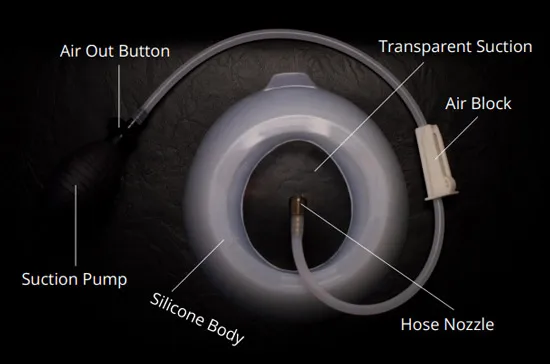
1. Silicone Body
The elastic body of most vacuum bells is orthopedic silicone. It is flexible, pleasant to wear, and compatible with the skin.
At the same time, it is exceptionally durable and easy to clean. Its chemical and mechanical attributes are also great. Don’t worry about it causing chemical reactions on your skin.
2. Transparent Window
Every vacuum bell on today’s market has a viewing window made of polycarbonate. Polycarbonates used in vacuum bells are very tough.
They are optically transparent. When applying a vacuum, you can see how your hollow chest raises through the window.
3. Hose Nozzle
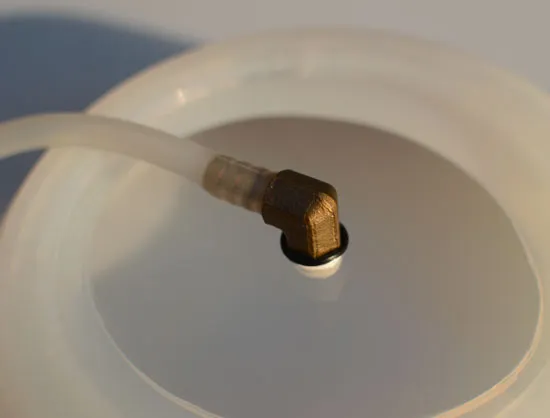
It is made of polyamide. The screw-coupling in the middle of the hose nozzle and the viewing glass reduces steadiness.
If you break the hose nozzle, you can ask the device’s manufacturer for a replacement. However, the chances of this happening are very minimal.
4. Suction Pump
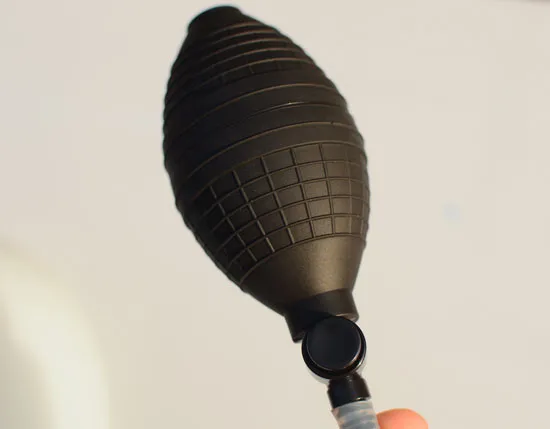
The purpose of the pump is to suck the air out of the device. This creates a vacuum that pulls the sunken sternum into a normal position. They’re made of PVC (Polyvinyl chloride). Due to security hazards, the power of the suction bulb is restricted.
Because of this, you should only use the suction bulbs that come with the device. Back in the day, Eckart Klobe’s vacuum bell concepts were so powerful that they could quickly generate a powerful vacuum harmful to the skin.
5. Air out Button
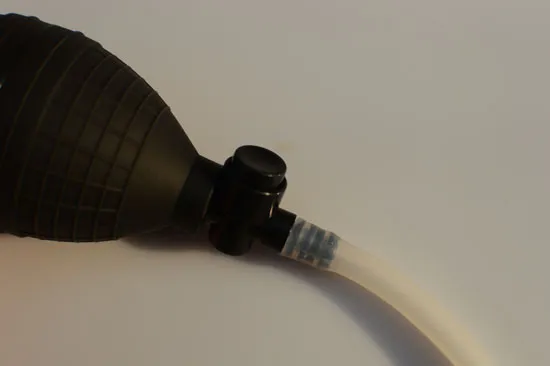
When you press the air-out button, the vacuum pressure stops, and you can easily remove the vacuum bell.
6. Air Block
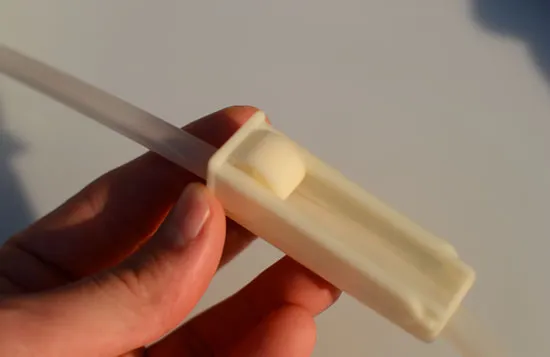
When you scroll up the air block, you can safely remove the pump without worrying air will come out.
When you scroll, the hose will get squeezed and won’t let air come out. You can then wear the vacuum bell when you go out without the pump.
Does it Work?
2021 Study
A recent 2021 research compares surgery versus vacuum bell therapy to correct pectus excavatum.
The goal was to compare one-year clinical outcomes between patients who underwent surgery with patients that did vacuum bell therapy.
The study concluded that vacuum bell therapy showed comparable results and can become an alternative treatment for patients that prefer non-surgical correction of the deformity.
2019 Study
А 2019 UK study concluded that vacuum bell therapy is safe for treating pectus excavatum non-surgically. Research has shown the treatment to be more successful in patients with:
- Mild deformity
- Symmetric deformity
- More compliant chest wall
- Mild rib flaring
2006 Study
A 2006 study proved that the vacuum bell is a successful alternative to surgery in selected patients with pectus excavatum.
Researchers demonstrated the initial results to be dramatic. However, long-term effects need to be improved, and further follow-up studies are necessary.
Another 2016 Study?
Most of the research on the effectiveness of vacuum bell therapy for pectus excavatum comes from a study done in Switzerland. The study included 140 patients (112 males and 28 females).
In this study, the patients averaged around 100 minutes of vacuum bell application a day. After the therapy was finished, in 61 patients, the vacuum bell raised the breastbone to an average level after 21.8 months of treatment.
About 80 percent of all patients saw a tremendous improvement in their chest wall, and about 15 percent got a total repair. Few patients had only applied the suction cup device for nearly a month, not completing the required time of the study.
There is a definite chance they could’ve had fantastic improvement if they continued to follow the therapy. The study’s successful results are why many doctors worldwide feel comfortable doing the vacuum bell treatment on patients.
CT Scans After VB Therapy
CT scan images shared by the Pediatric Surgical Clinic of the University of Jena in Germany show an immediate lifting of the sunken chest after vacuum bell therapy.
The photos below show the Eckart Klobe vacuum bell on the first day of treatment. The before and after images are done only a few minutes apart.
Patient 1
This is the first CT scan image done on a patient who started the vacuum bell therapy. In the Before photo, you can see a noticeable dent in the sternum.
You can see how effective the vacuum bell device is in lifting the sunken chest to a normal position in the second photo.
Patient 2
Again, you can also see a fantastic improvement in raising the indented chest. This proves how effective the vacuum bell therapy is in correcting the pectus excavatum deformity.
What Surgeons Say About It
Corey Iqbal
Dr. Corey Iqbal is a general surgeon in Overland Park, Kansas, allied with Overland Park Regional Medical Center. He did postgraduate training at the Mayo Clinic and had a track record of trying innovative things.
Dr. Corey received his medical degree from the University of Missouri - Kansas City School of Medicine. In a recent 2019 interview for Kansas City’s most extensive, award-winning healthcare network, he said the following:
“The risks of a vacuum bell therapy are minimal, while the benefits are potentially significant.”
Dr. Corey Iqbal
You can read the full interview about why he is such a massive fan of the vacuum bell therapy for pectus excavatum here.
Robert J. Obermeyer
Also, lots of other surgeons started implementing the suction bell therapy. Dr. Robert J. Obermeyer is the leader of the non-surgical correction of the inverted chest at CHKD, the nation’s best exploration facility for chest-wall abnormalities and a teaching site for doctors worldwide.
Here’s a video of Dr. Robert talking about the vacuum bell treatment:
He also said:
“Years from now, we may look at the surgical procedures and realize that many of these deformities could’ve been repaired with vacuum devices.”
Robert J. Obermeyer
The vacuum bell is the first non-surgical device pectus excavatum specialists ever used to fix a funnel chest.
Dr. Obermeyer also said,
“CHKD has always made attempts to decrease operating, and I believe this could wipe out the need for surgery in some pectus excavatum patients,”
In the video below, you can see Dr. Obermeyer applying the vacuum bell to a patient with a sunken chest who doesn’t want to undergo surgery.
Vacuum Bell in Europe
The vacuum bell device has been used in Europe for many years, yielding incredible results. Investigation indicates that the chest improvement could be permanent.
Dr. Obermeyer went to see pectus experts in Switzerland who used the vacuum bell effectively. Since then, he has brought this technology to the United States.
What Surprised Me
It is strange how the vacuum bell therapy for pectus excavatum is still dismissed by conventional medicine as an “alternative method.” It shows that many doctors are not seriously concerned with the non-surgical treatment of the deformity.
Most established surgeons prefer to operate. Since the beginning of the health system, there has been nothing but surgery for pectus excavatum correction. Now there is an alternative that works: the vacuum bell method.
4 Things to Know
Where to Apply
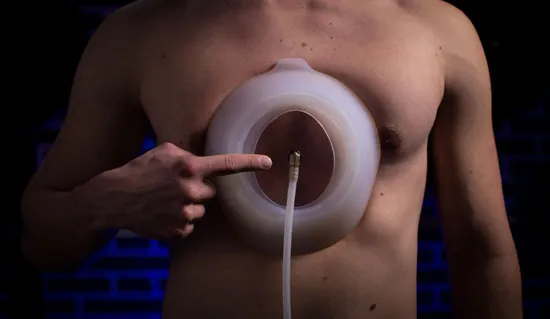
It would be best to place the vacuum bell over the hollowed chest’s deepest point, between the nipples.
How to Attach
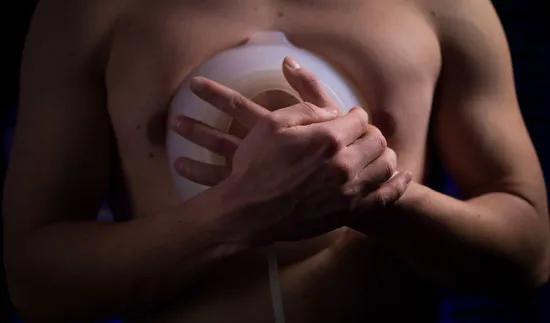
The silicone ring should be spread out and moderately pressed to your chest. It should tighten up by itself when its inner sides contact the skin. When the vacuum is applied, the device should connect to your body.
How to Apply Negative Pressure
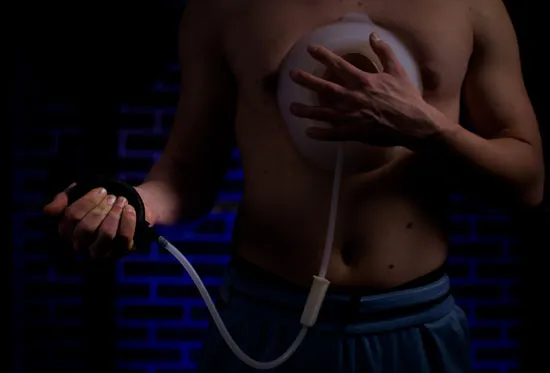
The vacuum force is generated when you press the suction pump. To increase the negative vacuum pressure further, squeeze the suction pump when it regains its original form.
How to Remove
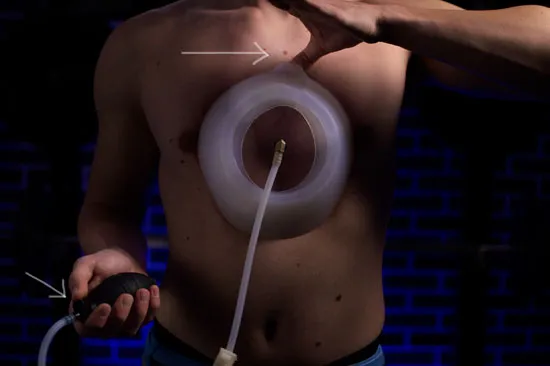
To remove the vacuum bell, it needs to be re-exposed to air. Turning the suction pump’s air inlet valve at the end of a therapy session would be best. That makes the air come into the device slowly to avoid sudden aeration.
Pectus Healing Vacuum Bell Review
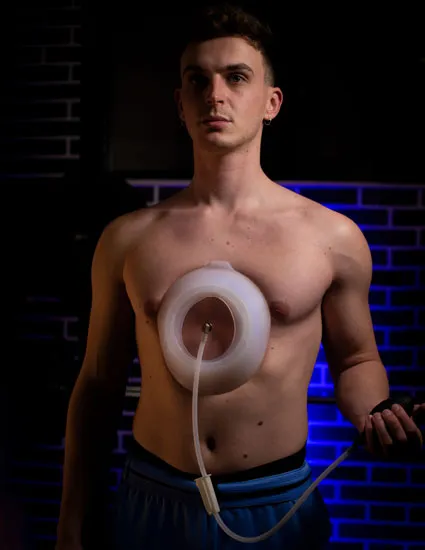
Pros
- Free shipping worldwide.
- Ten-year manufacturer guarantee. Currently, this is the only vacuum bell-producing company that offers that. Not even Eckart Klobe’s company.
- Copper connector instead of a cheap plastic one that can break easily.
- The highest-grade Medical silicone makes it impossible for skin allergies to occur and fits the patient perfectly.
- No plastic elements are prone to breaking.
- 100% Atoxic.
- Twelve different sizes to choose from, depending on your deformity.
- Sizes 11, 12,5, and 14 cm are built for children with pectus excavatum.
- You will never get pressure loss during the application, which is extremely important.
- Excellent customer reviews on Reddit.
- The company is an official supplier to many hospitals and medical doctors in Russia.
Cons
- You’ll have little red spots after you take it off.
- I feel very uncomfortable while running or hiking with it.
- The women’s breasts can get pulled in when the vacuum is applied.
A Short History of the Vacuum Bell
Applying a vacuum to lift a sunken sternum is more than a century old. The pediatrician Lewis Spitz and the Munich orthopedist Fritz Lange tried it first, with a glass bell. It did not work. The cups were glass: heavy, stiff, and unbearable to wear for long enough to move anything. The idea stalled there for decades, and the arrival of surgery gave nobody much reason to go back to it.
Materials caught up in the 1990s. In 1992 a German chemical engineer, Eckart Klobe, was offered surgery for his own funnel chest and turned it down. He started experimenting at home with vacuum cleaners, built his own device, and wore it from 1992 to 1995 until the dent was no longer visible. Studies since have found the method promising in both surgical and non-surgical correction.
He registered the patent in 1997 and spent years turning the prototype into something wearable every day - hundreds of samples before one worked consistently. It was registered as a medical product in 2002, which let it be sold across the EU, and he founded a company for it in 2003. By 2004 the four hundredth bell had been made. In Germany you will still see it called a Trichterbrust Saugglocke.
In 2013 Klobe took the Strategy Award for Best Innovation. Dr Robert J. Obermeyer, who led the non-surgical pectus project at CHKD, visited the factory, and that visit helped push the device toward its FDA classification as a class 1 medical device. It has had FDA registration in the USA since April 2012 and a Canadian MDEL since January 2014.
Is the Vacuum Bell Safe?
Vacuum bell therapy is considered very safe, and over the years very few problems have been reported. That matters most as a comparison: the spread of the Nuss procedure brought a rise in surgical complications, and several studies have reported near-fatal ones, including injuries to the heart and mammary vessels. The gap between those two risk profiles is the whole reason this device is worth your attention.
Every Side Effect That Has Been Reported
This is the complete list, not a selection:
- Dizziness
- Bruising
- Gynecomastia
- Irritated nipples
- Sore chest muscles
- Back pain (dorsalgia)
- Chafed skin
- Blisters
- Loose skin
- Small red non-raised patches (petechial bleeding)
- Blood droplets
- Acne
- Tingling in the arms (transient paresthesia)
Nearly all of them answer to the same two adjustments: wear it for less time, and pump it less hard. Read the list with that in mind rather than as thirteen separate problems.
Dizziness. Stay seated or lying down at the start and end of a session. Slow pumping and slow depressurisation reduce it. Once you are at the pressure you want, stand up carefully.

Bruising. Skin turning blue under the bell is a subcutaneous hematoma. A high proportion of users get them and they clear on their own. Blood pools under the bell temporarily. Take it off after about 20 minutes, wait a few minutes, reapply at lower pressure. If you get dark or black hematomas, see a doctor. Your skin generally adapts within a week.
Gynecomastia. In some adolescents and young men the nipples enlarge, apparently from repeated touch stimulation. It is rare. If it bothers you, ask your doctor - depending on severity that means a break of several weeks or drug therapy.
Irritated nipples. Caused by the rim crossing a nipple. Offset the bell slightly to one side so one nipple is fully covered and the other is fully clear.
Sore chest muscles. The chest and rib muscles are being stretched. Pause for a few days; shorter sessions and weaker pressure help.
Irregular back pain. The ribs pass some of the counter-force to the spine. Shorter sessions, weaker pressure.
Chafed skin. From the skin rubbing on the polycarbonate window, especially if you move around a lot while wearing it. Rest until it heals - under negative pressure, chafed skin can bleed.
Itchy blisters. Usually clear to light yellow, sometimes reddish. Take several days off until they resolve, for the same bleeding reason.
Loose skin. Fluid collecting in the tissue. Shorter sessions, weaker pressure.
Blood droplets. Very rare, and caused by extreme negative pressure. Shorten and weaken.
Petechiae. Pinpoint bleeding, 2-4 mm across. Often unavoidable, and usually fades a few weeks after you finish treatment.
Acne. Can develop in the suction zone. Extremely rare, and the reason a skin routine is worth having.
Tingling arms. The precursor to numbness, most often in the upper arms. Shorten the session and drop the pressure.
Can the Vacuum Bell Cause a Collapsed Lung?
No. The confusion comes from tracheal suctioning, which is genuinely associated with tension pneumothorax - but that is a completely different device aspirating secretions from the airway, and it is not something a vacuum bell can do. Where the evidence does show collapsed lung is in surgery: Rehbein’s method causes it during an operation. Pneumothorax is a risk to weigh when you are considering a minimally invasive repair, not a suction cup.
Where problems do occur, they are almost always down to too much use at too high a pressure in the first weeks. Build up gradually and keep a skincare habit.
Does the Vacuum Bell Hurt?
For most people, no - but it is not comfortable either, and that distinction is worth making before you start.
A study tracking side effects through vacuum bell therapy found it harmless, with pain occurring in some patients only on the first applications, and not severe. Most people report mild sternum pain during the first five sessions and a feeling of pressure inside the chest. It is localised to the area under the bell - there is no evidence of pain elsewhere in the chest - and it stops when you take the device off.
Beyond that, the usual complaint is redness or bruising where the rim sits, which resolves in a few hours. Lower the suction if you need your chest to look normal that day. A medical article from KidsHealth notes that back pain, or a burning or prickly feeling in the arms, happens rarely; take the bell off and try again a few hours later at lower pressure.
If you are a parent and your child has redness or bruising, shorten the wear time or reduce the pressure until it settles.
What the sensation actually is: the vacuum pushing your sternum outward. That is all. It is not a sign of anything being aggravated. Lifting the chest feels strange, and for me it came with an immediate sense of breathing more easily. Start with short sessions to see how you respond, then build up day by day. If you feel something not described anywhere here, take it off and speak to a physician.
The Advantages of Vacuum Bell Therapy
Against surgery, the case for the bell is strongest when the deformity is mild or moderate:
- The therapy is non-surgical
- Less restrictive day to day
- Fewer side effects
- You set the intensity yourself
- No ban on contact sport, as there is after the Nuss procedure
- No scars
- No blood loss
- Less pain
- Shorter treatment
- Nothing to beep at an airport
It is non-surgical. No months or years of preparation, no X-ray exposure, and no waiting on a surgeon’s schedule while the deformity gets worse. Set that against what follows a Ravitch or Nuss repair: the operation is severe and limits physical activity for around three months, with nausea and vomiting from the general anesthetic, soreness and swelling, disturbed sleep, chest pain that can persist past a month, and a real risk of opioid dependence.
It is less restrictive. Take it off, play sport with your friends, put it back on. There is room to fit it around your life. Bars, by contrast, come out in a second operation.

Fewer side effects. The known ones are skin bruising and swelling and the rest of the list above - all reversible, none of them structural.
4 Disadvantages of the Vacuum Bell Compared With Surgery
It will improve your chest. It also has four real weaknesses next to the Nuss procedure, and you should know them going in.
It is monotonous. Every application is identical. The sternum stays flat for a few hours afterward and then settles back, and it takes months before the change holds. There is nothing interesting about it. What it does teach you is discipline.
It is a constant reminder. Your chest never quite leaves your mind. After a Nuss repair some people genuinely forget they had a sunken chest until the bar comes out. Wear the bell for an hour and you spend that hour thinking about your chest - checking the mirror, wondering how far it lifted, how far it will drop back. Expect that for at least a year.
I meditated for exactly this reason, and found real relief in doing it with the bell on. The point of meditation is the absence of thought; make releasing the thoughts about your chest the goal of the session.

It is annoying. At home it is easy. At school, on holiday with friends, in a shared dorm room, or when you are being intimate with someone, it is not. That feeling does fade as it becomes routine.
It is uncomfortable. Some bells have sharp silicone rims, which is hard on your skin and can wreck your sleep if you wear it at night. Buy from an established manufacturer - most of the discomfort complaints I have seen on pectus forums come from people using DIY builds. A bell you cannot bear to wear for long is a therapy that will not work.
None of this is a reason to choose surgery instead. During the first weeks it grates; then it stops.
Vacuum Bell Therapy for Adults
Correcting pectus excavatum as an adult with the bell is possible, and it is backed by research. Adults have one genuine advantage over teenagers: a firmer, more stable ribcage means the sternum does not drop back as quickly.
A 2006 study found that children get a more obvious lift during a session, but that the adult chest held its elevation longer afterward - roughly 30 to 60 minutes - while children’s sank back faster. Adults improved more slowly but continuously. Every adult in the study except one 19-year-old with asymmetric pectus excavatum was satisfied enough to keep going. Across the whole group, 27 patients - 79% - had a permanent sternum elevation documented after three months.
A 2019 article from Verlag Orthopädie-Technik in Dortmund reported fair-to-good results even in middle age, including a 61-year-old who treated a 4 cm deep chest with a 26 cm bell, wearing it three to four hours a day split across two or three sessions. Eckart Klobe himself corrected his chest as an adult over two and a half years. On video he puts the usable range at “between 4-5 years, even up to 50 and 60 years old.”
How long it takes. For an adult, 24 to 36 months, and that figure is soft. Two people the same age can have quite different chest wall stiffness, start on the same day, and get different results. The adult chest wall is less flexible than a child’s, which is what stretches the timeline.
Fitting it around work is the real adult problem - a teenager has the free hours and you do not. Some people wear it eight hours a day through the office and simply do not care what their colleagues think. Whether that is you or not, the variable that actually predicts results is discipline: applying it daily, including on the days you would rather not.
How to Clean a Vacuum Bell
Use a soft cloth, lightly moistened with plain water, soapy water, or alcohol. Never use propanol or isopropanol - propanol clouds the polycarbonate window permanently. Inspect the bell before every use to check it is clean and mechanically intact.
Avoid ordinary disinfectants. Most general-purpose cleaners contain propanol, which rules them out. A cloth with a little dishwashing soap on it is usually more than enough.

Never soak it. Keep the cloth barely damp and keep the bell away from running water. The valves do not tolerate water and will start to leak. If they do fail, the manufacturer sells replacement parts.

Kept dry and wiped down after each session, a bell stays free of odour and bacteria - which matters mostly because it makes you more likely to actually pick it up and use it.
My Own Vacuum Bell Experience
I was not under medical supervision the first time, though my parents and my brother were next to me. We had read the studies before buying it and knew it was safe.
The first month. I wore it whenever I had free time. After a few weeks I took several days off to let the chest and skin settle down, then built back up to a few hours a day as the dent got used to being lifted. I had a check-up a month in; my doctor was surprised by how much had changed, and that was what convinced me to keep going.
First impressions. It was bigger than I had pictured - shaped like a giant silicone doughnut. Twenty minutes in, the thing I noticed was not my chest but my lungs having more room. After about ten days I could pump the sternum up close to the glass, and on the morning after the tenth day the dent - 2.5 cm deep when I started - stayed lifted on its own.
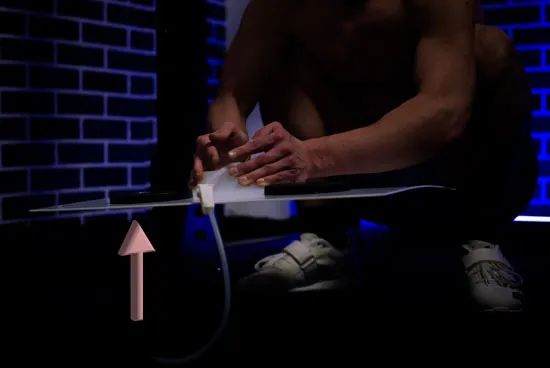
Keeping the seal. I used to lean against a wall or a table to press the device onto my chest, which positioned it better and stopped it dropping off mid-session.
How hard I pumped. Harder than I would tell you to. I went until there was real pain, because I wanted it fixed. If your pump has a gauge, 120-150 mmHg (5-6 inHg) of negative pressure for an hour is the range I settled on.
The sensation. Suction is intense, and I could feel a vibration in my chest when I spoke. It is a satisfying kind of ache that eases after a few minutes. In the first days I could only manage a few minutes at a time and sometimes had to lie down while my circulation adjusted. By day three I could see through the window that the chest had flattened, and it held for about two hours after I took it off.
Skin. Past the first weeks I had no trouble at all, once I had a routine before and after each session. The rim left the skin reddish; ten minutes after taking it off it was normal again.
What I would tell you. Do not rush the first month - the goal then is only to get familiar with how much force the device applies. Expect to keep going for a year for the correction to hold, longer if your deformity is deep.
FAQ
Who Is It For?
Patients with mild and moderate cases of pectus excavatum are ideal candidates for vacuum bell therapy, especially if they want to evade surgical procedures.
Can the Vacuum Bell Bend the Bones?
No, it can’t. You can’t reshape the solid bone structure with the vacuum bell. However, the sternum’s internal joints are moved, the rib cartilage is bent, and the connective tissue fibers and ligaments are stretched.
Are a Couple of Weeks of Therapy Enough?
You can’t permanently repair pectus excavatum in a couple of weeks. However, the chest will stay elevated after every vacuum bell therapy session. When you apply the vacuum bell, the chest is flattened.
Many patients with compressed hearts and lungs feel substantial relief while using the vacuum bell. The device decompresses the chest. The patients instantly feel their lungs expanding to a point they never felt before.
However, this type of correction is only a mobilization of the chest. After you take the vacuum bell off, the dent in the chest will fall back again.
It takes plenty of months of consistent VB application before the funnel remains stable without a suction cup.
Can You Permanently Correct 1 cm a Month?
That is possible. In most cases, the caved-in chest is closely associated with postural flaws such as scoliosis, round back, forward head posture, and rounded shoulders.
According to Dr. Eckart Klobe, correcting posture problems with stretches and physiotherapy exercises will accelerate repairing the pectus excavatum deformity with the vacuum bell.
Does the Correction Process Slow Down After Some Time?
During the first months, you should finish the most straightforward steps. Those are chest mobilization, improving posture, and upper body muscle strengthening.
The most tedious and challenging task is stabilizing the sternum in a raised position during vacuum bell therapy.
How Do I Make Constant Progress?
The mobilization phase stretches the anterior chest wall’s fibers, ligaments, and joints during the first three months.
Mobilization is done by applying the vacuum bell for at least an hour daily.
To stabilize in an elevated position permanently, you should keep the sternum raised as often and as long as possible. To simplify:
- Try to increase the vacuum bell application’s duration gradually.
- Try to use the device while you sleep.
- Aim to use the device for at least 4 hours daily in the second phase (months 3-6).
How Long Should I Apply the Vacuum Bell?
Essentially, as much and as long as possible. That’s how you correct the pectus excavatum deformity in the shortest time frame.
However, individually, there are lots of significant differences. Some patients can tolerate only half an hour of VB application.
That isn’t enough to correct the funnel chest without surgery. However, it is still better than zero minutes of application a day.
Usually, sensitive skin is the biggest reason patients can’t endure even a 30-minute VB therapy session. You must learn to listen to your body. If you’re feeling severe aches, don’t hesitate to contact a specialist and stop the therapy.
You can tolerate the shorter therapy sessions if everything goes smoothly in the first weeks. With time, you should increase the wear time gradually.
How Powerful Is It?
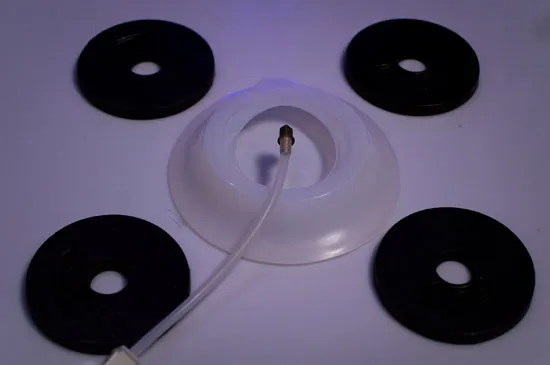
A regular vacuum bell’s power is enough to lift a maximum of 1 kg per square centimeter. This isn’t enough to raise a sunken sternum.
However, the vacuum bells designed to fix pectus excavatum can generate mind-blowing force. Let’s take Eckart Klobe’s vacuum bell, for example.
Suppose the surface of a circular vacuum bell is 20 cm in diameter. That’s roughly 315 square centimeters. This device can lift a total of 314 kg with a complete vacuuming.
With partial vacuuming, the suction forces are congruently lower. For example, 15% of the device’s vacuuming power is enough to pull around 47 kg.
Modern vacuum bells can pull the indented chest to the device’s transparent window. Some patients use the vacuum bell’s maximal capacity, so their inverted chest goes into a “pectus carinatum shape.”
6 Situations to Avoid It
Eckart Klobe clearly stated a few circumstances where you should not use the vacuum bell. Don’t use this therapy if you suffer from diseases that alter the strength of the bones.
Such diseases are:
- Osteogenesis Imperfecta (glass bones)
- Osteoporosis (lessening of the dense bone tissues).
In the case of Angiopathy. That is a standard term for an illness of the blood vessels (veins, arteries, and capillaries). These can result from the following:
- Marfan syndromeAneurysm (abnormal expansions of the arteries).
If you suffer from Coagulation Dysfunction. These are disturbances in the body’s capability to regulate blood coagulation, involving:
- Thrombopathy
- Hemophilia (bleeding disorder).
How to Remain Motivated
Make Measurements

To see progress and success, you must measure the deformity regularly. I measured my chest with a ruler weekly and noted the result on paper. Vacuum bell therapy requires a lot of patience.
It is hard to notice the results by looking at yourself in the mirror. You can gain a lot of motivation by merely looking at the progress evident on paper.
It’s hard to notice any improvement in the caved-in chest, especially if you look at your body daily. The vacuum bell therapy won’t be helpful for the impatient! Always remember, the funnel chest correction can take up to 2 years!
Take Photos



Another helpful measurement tip is to take photos (front view and two lateral views at 45° and 90°). First, take pictures before starting the therapy. After that:
- Take photos of your chest every two weeks
- Import these photos to your computer
- Make sure you save them to a Cloud Storage service because a single computer crash can be fatal to your photos.
Remember to measure your chest after taking off the device for 14 hours. As you already know, you will raise the chest to a normal position after each session of vacuum bell therapy. It will gradually fall back to a sunken position, but not as deep as before.
Fourteen hours of wait is required to have the same foundation. After taking photos every week, I can proudly say that I raised the dent by 2 mm every month in the first stages of treatment.
Extra Motivation
As I previously stated, the progress stalls after a few months. However, if you do the math, that is still about a 2 cm correction in a year! More than enough to correct the deformity and make the sunken chest less visible.
If you have a more severe pectus excavatum, you must continue the treatment even after a year. Be patient, take measurements, and trust the process.
Conclusion
Vacuum bell therapy is a scientifically proven method to correct pectus excavatum non-surgically for both adults and kids. It helped thousands of people, including me, improve our deformities.
It is a simple device that pulls the breastbone out of the cavity. Being consistent in the device application is essential if you want to see success.
Thank you for reading! I wish you continuous achievements and persistence!
Sources
- Haecker FM, Mayr J. The vacuum bell for treatment of pectus excavatum: an alternative to surgical correction? Eur J Cardio-Thorac Surg Off J Eur Assoc CardioThorac Surg. 2006 Apr;29(4):557-61.
- Jung Y, Yi E, Lee K, Chung JH, Cho S, Lee S. Surgical versus Vacuum Bell Therapy for the Correction of Pectus Excavatum: A Comparison of 1-Year Treatment Outcomes. J Chest Surg. 2021 Dec 5;54(6):473-9.
- Patel AJ, Hunt I. Is vacuum bell therapy effective in the correction of pectus excavatum? Interact Cardiovasc Thorac Surg. 2019 Mar 28;ivz082.
- Haecker FM, Mayr J. The vacuum bell for treatment of pectus excavatum: an alternative to surgical correction? Eur J Cardio-Thorac Surg Off J Eur Assoc CardioThorac Surg. 2006 Apr;29(4):557-61.
- Vacuum bell therapy - PMC [Internet]. [cited 2022 Nov 24]. Read it
- The Kansas City Star [Internet]. [cited 2022 Nov 24]. Read it
- Dr. Robert Obermeyer | Pediatric Surgeon | Nuss Center | CHKD [Internet]. [cited 2022 Nov 24]. Read it
- Vacuum Bell | Pectus Excavatum Treatment | Medicine & Health | CHKD [Internet]. [cited 2022 Nov 24]. Read it
- CHKD surgeons use vacuum bell device to treat pectus excavatum [Internet]. [cited 2022 Nov 24]. Read it
- Lewis Spitz. In: Wikipedia [Internet]. 2022 [cited 2022 Nov 24]. Read it
- Fritz Lange (surgeon). In: Wikipedia [Internet]. 2022 [cited 2022 Nov 24]. Read it
- Device is an easier option to correct chest deformity - The Virginian-Pilot [Internet]. [cited 2022 Nov 24]. Read it
- Pectus Perú [Internet]. [cited 2022 Nov 24]. Read it
- Pectus Perú [Internet]. [cited 2022 Nov 24]. Read it
- Obermeyer RJ. Incorporating vacuum bell therapy into pectus excavatum treatment. J Vis Surg. 2016;2:99.
- Trichterbrustversorgung mit der Saugglocke nach Eckart Klobe - Orthopädie
- Technik [Internet]. [cited 2022 Nov 24] https://360-ot.de/trichterbrustversorgung-mit-der-saugglocke-nach-eckart-klobe/
- Haecker FM, Sesia S. Non-surgical treatment of pectus excavatum. J Vis Surg. 2016 Mar 23;2:63.
- vacuum bell for treatment of pectus excavatum: an alternative to surgical correction? | European Journal of Cardio-Thoracic Surgery | Oxford Academic [Internet]. [cited 2022 Nov 24]. Read it
- OT V. Trichterbrustversorgung mit der Saugglocke nach Eckart Klobe [Internet]. Orthopädie Technik. 2019 [cited 2022 Nov 24]. https://360-ot.de/trichterbrustversorgung-mit-der-saugglocke-nach-eckart-klobe/ Read it
- Orthopädie Technik [Internet]. Orthopädie Technik. [cited 2022 Nov 24]. Read it
- El Dr. Patricio Varela, experto mundial en pectus presenta a Eckart Klobe, ingeniero alemán inventor del Vaccum Bell para curar el pectus excavatum… | By Pectus Perú | Facebook [Internet]. [cited 2022 Nov 24]. Read it
- Haecker FM, Sesia S. Vacuum bell therapy. Ann Cardiothorac Surg. 2016 Sep;5(5):440-9.
- Pectus Excavatum: Vacuum Bell Device (for Parents) - Nemours KidsHealth [Internet]. [cited 2023 Feb 12].
- Barker J. A lot better than surgery: Jesse’s treatment for pectus excavatum [Internet]. Boston Children’s Answers. 2021 [cited 2022 Nov 27]. Read it
- X-rays: Overview, side effects, risks, and more [Internet]. [cited 2022 Nov 27]. Read it
- Vacuum Bell Therapy: Does It Cure Pectus Excavatum? [Internet]. Cosmetic Surgery Nottingham & Plastic Surgery from Stephen McCulley. [cited 2022 Nov 27]. Read it
- Risks of Nuss procedure (pectus surgery) [Internet]. aleris.dk. [cited 2022 Nov 27]. Read it
- Cohen NS, Goretsky MJ, Obermeyer RJ. Bleeding at Removal of Nuss Bar: Rare But Sometimes Significant. J Laparoendosc Adv Surg Tech A. 2018 Nov;28(11):1393-6.
- Notrica DM, McMahon LE, Johnson KN, Velez DA, McGill LC, Jaroszewski DE. Lifethreatening hemorrhage during removal of a Nuss bar associated with sternal erosion. Ann Thorac Surg. 2014 Sep;98(3):1104-6.
- Mao YZ, Tang S, Li S. Comparison of the Nuss versus Ravitch procedure for pectus excavatum repair: an updated meta-analysis. J Pediatr Surg. 2017 Oct;52(10):1545-52.
- Activity after Nuss procedure: Restrictions [Internet]. aleris.dk. [cited 2022 Nov 27]. Read it
- Pilegaard HK. Nuss technique in pectus excavatum: a mono-institutional experience. J Thorac Dis. 2015 Apr;7(Suppl 2):S172-6.
- Patel AJ, Hunt I. Is vacuum bell therapy effective in the correction of pectus excavatum? Interact Cardiovasc Thorac Surg. 2019 Aug 1;29(2):287-90.
- Complications associated with the Nuss procedure: analysis of risk factors and suggested measures for prevention of complications - PubMed [Internet]. [cited 2022 Dec 1]. Read it
- Hematoma: Overview, types, treatment, and pictures [Internet]. [cited 2022 Dec 1]. Read it
- Pneumothorax: Practice Essentials, Background, Anatomy [Internet]. [cited 2022 Dec 1]. Read it
- Tracheostomy Suctioning Information & More [Internet]. [cited 2022 Dec 1]. Read it
- Hitomi K, Maeda L, Taniguchi A, Kawahara R, Kitamura S. [Two cases of tension pneumothorax caused by tracheal suction during the operation of pectus excavatum]. Masui. 1993 Oct;42(10):1517-20.
- Rash 101 in adults: When to seek medical treatment [Internet]. [cited 2023 Jan 31]. Read it
- Software MA e-Business. How Do Braces Actually Work? - The Orthodontists [Internet]. [cited 2023 Jan 31]. Read it
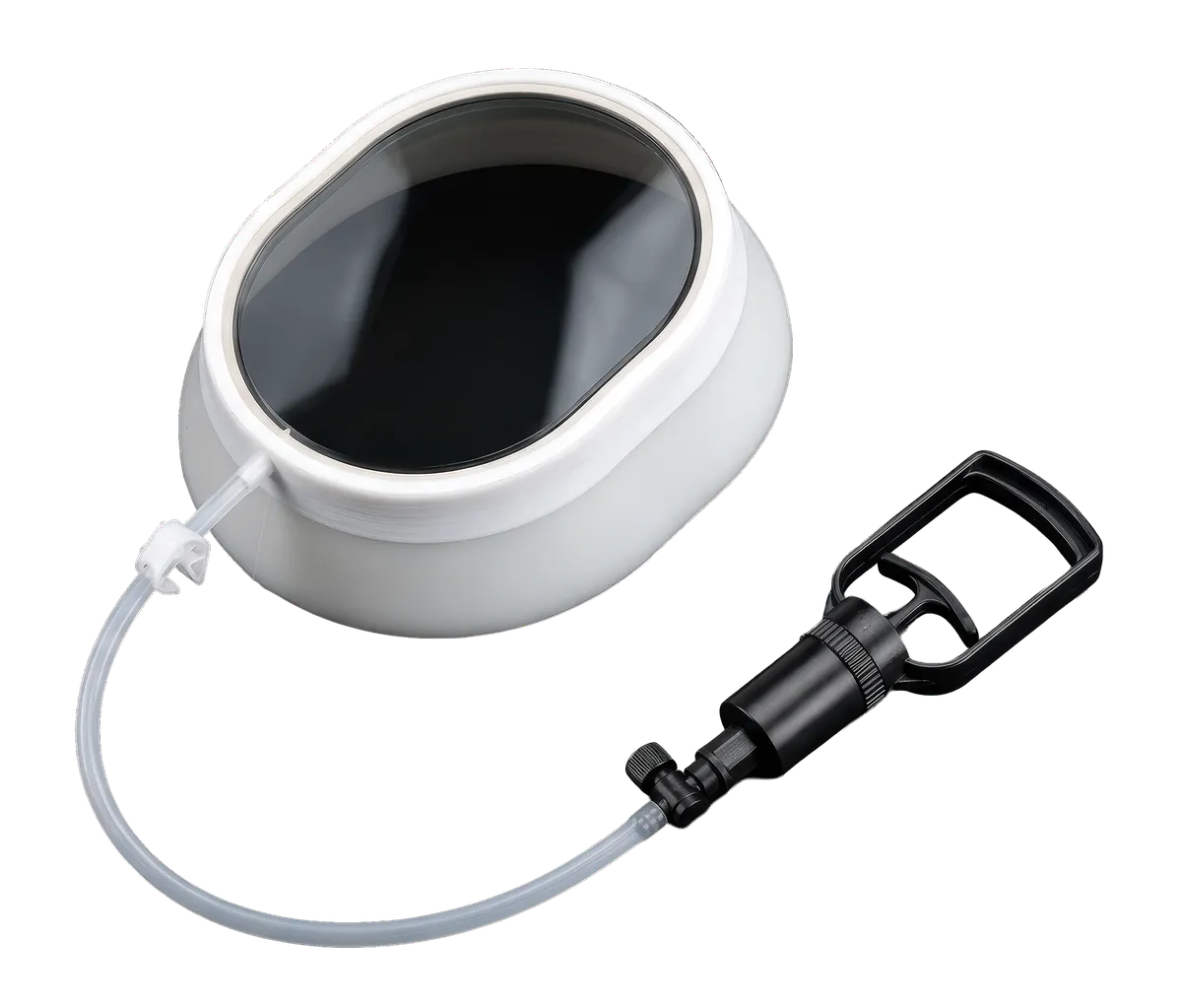
A bell sized to your chest and depth, with the session length and suction progression that decide whether it works.
- Cup sized to your chest, not a size chart
- Session length and pressure progression
- How to tell at 8 weeks if you are responding

This article is for educational purposes only and does not constitute medical advice. Always consult a qualified healthcare professional before starting any treatment plan. View full disclaimer →